
Technology major Siemens on Tuesday said it will invest Rs 1,600 crore (Rs 16 billion) in India over the next three years for venturing into wind turbine manufacturing and scaling up existing production capacity.

Audit is being questioned by investors. Subhiksha is an example. In the case of Siemens India, institutional investors questioned the valuation in a deal involving the sale of Siemens Information Systems to German parent Siemens AG. This shows the low level of investor confidence in the corporate governance system. The audit committee mechanisms need strengthening.
Multinational healthcare and pharmaceutical major Bayer Group said on Friday it is planning to sell its diagnostics business to Siemens AG, Germany for euro4.2 billion.

India Inc could be embarking upon a new phase of capital expenditure (capex) cycle, observed analysts, and suggest its revival would lead to a rerating of industrial stocks. Assisted by a property upcycle, analysts at Jefferies said several government initiatives were likely to drive capex. Indicators, they said, include a private project announcement at Rs 25 trillion for 2022-23 (up 150 per cent from pre-pandemic levels) and credit growth at about 16 per cent, which is closer to pre-pandemic highs.

At present, less than one per cent of manufacturing GDP comes from automation in India.

Operating margins have been the primary driver of corporate earnings in India in recent quarters, despite revenue growth suffering from weak consumer demand. Companies across sectors have reported a sharp improvement in earnings before interest, tax, depreciation, and amortisation (Ebitda) margins over the past two years, benefiting from lower commodity and energy prices. Higher margins more than compensated for slower revenue growth, resulting in double-digit growth in net profit for five consecutive quarters.

Among the 30 Sensex companies, Larsen & Toubro, Power Grid, NTPC, State Bank of India, Reliance Industries and HDFC Bank were the biggest laggards. Sun Pharma and Nestle were the only gainers.
Giving another boost to the great Indian growth story, seven domestic firms have been named as the emerging global challengers to the world's leading blue chips by the global equity research major Standard and Poor's.

'The deal pipeline across products is robust for 2024.'

Apple chief executive Tim Cook on Wednesday met Prime Minister Narendra Modi as the iPhone manufacturer is looking to invest more in the world's second-largest smartphone market. Cook, on his first trip to India in seven years, opened Apple's first retail store in the country in Mumbai on Tuesday and will launch another in Delhi on Thursday. Looking to replicate what China did to Apple's business in the last 15 years, the tech giant is eyeing India's massive market with an expanding middle class to power sales growth, and potentially make it a home base for the production of millions of Apple devices.

The government believes firms which are subject to China's laws could be forced to hand over information to Beijing's security services.

74 of these fatalities were reported by 8 companies: Coal India (21), L&T (14), Vedanta (13, of which Hindustan Zinc reported 7), Tata Steel (7), Power Grid Corporation of India (7), JSW Steel (6), and ONGC (6).
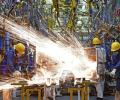
Operating margins for some companies dipped in Q3, 2021-22 but this sector could be nearing the bottom of the cycle in terms of profits.

Even if some of those projects remain on paper, the potential for manufacturers and engineering firms is too big to ignore

The key risk factors would be anti-incumbency, small vote share swings causing large impact on outcomes and the 2004 example.
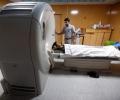
Siemens Healthineers, one of the largest manufacturers of made-in-India CT scanners, has sold 80-100 such machines in the last 45 days. The medical technology firm typically sells 250 machines in a year.

SoftBank Group-backed Ola Electric is in talks with multiple global suppliers to build a battery cell manufacturing plant in India with a capacity of up to 50-gigawatt hours, sources said. As part of its broader electrification push, the firm plans to invest in companies with advanced cell and battery technology, alongside the 50 Gwh battery plant. Ola Electric needs 40 Gwh of battery capacity to power 10 million electric scooters annually. The remainder will be for its electric cars, which the company plans to manufacture in the future.

The engineering and construction (E&C) sector delivered an excellent performance in the last two financial years (FY2021-22 or FY22 and FY23's nine-months) and there's reason to believe that FY24 will also see outperformance. The sector has emerged from the pandemic with stronger balance sheets and more rational cost structures. It has a big order book and it should see new order flows accelerate in FY24.

Finance Minister Nirmala Sitharaman on Tuesday unveiled a Rs 39.45 lakh crore Budget with a view to fire up the key engines of the economy to sustain a world-beating recovery from the pandemic. This was Sitharaman's fourth Budget. While the taxpayers were left in the lurch, once again, was she able to cheer Corporate India?

Given the security dilemma prevailing between India and China, India should curb the operation of Chinese telecom companies in India, asserts Dr Rup Narayan Das.

Asserting that the self reliant India programme will help revive the global economy, Prime Minister Narendra Modi on Thursday told global business community that his government aims to transform the country through access, inclusion and empowerment while also ensuring complete data security. Addressing the World Economic Forum's online Davos Agenda Summit, where he also interacted with global business leaders, Modi also said India offers a predictable and friendly environment from tax regime to FDI norms. He said Aatmanirbhar Bharat movement is committed to global good and global supply chain while the country's digital profile has been completely transformed.
Telecom equipment maker ZTE had to overcome strong prejudices to establish itself in India.

Eyeing to become India's largest player in 2020 Adani Group plans to invest 70 per cent of its capital expenditure in clean energy and energy efficient systems.

Compared to their Indian peers, MNCs have higher return ratios.

Apart from them, consignments of 11 top importers, including LG, Samsung, Toyota, Honda, and Siemens, will also be allowed entry, relieving them of the 100 per cent inspection rule.

Top companies across sectors -- automobile maker Maruti Suzuki, consumer electronics giant Samsung to IT giant Infosys -- have reopened factories and offices as India took its first steps towards resuming economic activity after weeks under a near-total coronavirus lockdown.

The Q3 office rebound growth was led by Bengaluru and Hyderabad, which together accounted for nearly 80 per cent of the net absorption in Q3.
.jpg)
A stumbling economy, a falling currency and high inflation, plus weak consumer demand, mean more and more become excess baggage.

PM said he admires German leadership in clean energy and commitment to combating climate change.

India serves as the company's R&D hub as it morphs into a health tech major.

Ajit Balakrishnan on how Indian society and the polity need to be carried along.

The 35,000 square foot facility would increase Capgemini's BPO's total capacity in India to over 4,500 seats, the company said.

CRRC Pioneer Electric (India) Private Limited, whose bid for the project is a joint venture of the Chinese firm CRRC Corporation Ltd with a Gurugram-based company according to its website, is one of the six contenders for the tender for procuring propulsion systems or electric traction kits for 44 trains to function as the Vande Bharat Express or Train 18.
The Asian Green City Index examines the environmental performance of 22 major Asian cities in eight categories: energy and CO2, land use and buildings, transport, waste, water, sanitation, air quality and environmental governance.
In his latest book, 101 Myths & Realities @ The Office, Utkarsh Rai seeks to do just that -- bust the myths of the corporate culture. We bring you an exclusive excerpt from the book.
